“With the U.S. adding 30 million people a decade, it costs too much in infrastructure, fuel and time to continue sprawl-inducing development practices. As a result, new suburbs today are denser and the re-use and repurposing of existing communities have become a key element of land-use policy.”
VICTOR MACFARLANE, Managing Principal, Chairman and CEO
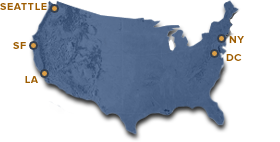
MacFarlane Partners looks to capitalize on the burgeoning smart-growth movement and other socioeconomic trends that favor higher-density, urban-style living over decentralized sprawl. Our investments are concentrated in “Global Pathway Cities” — leading U.S. metro areas with dynamic economies, favorable demographics, strong real estate fundamentals and vibrant cultures.
View our current investment criteria and key investment contacts here.
The popularity of the urban lifestyle and the rise of smart-growth development are boosting space demand in urban areas and reshaping suburbs to make them more urban-like.
Shorter commutes and the allure of urban living are drawing young renters, older “empty nesters” and others back to central cities and other urban neighborhoods.
Urban neighborhoods mix residential and commercial land uses to create lively, walkable districts with a variety of shopping, dining and entertainment options – an experience that suburbs often have not provided.
Smart growth emphasizes efficient use of land and encourages redevelopment of underutilized infill sites, transit-oriented developments and high-density, master-planned communities.
Smart growth is key to accommodating future population increases while keeping communities livable – something that traditional suburban development is unlikely to achieve.
For investors, urban submarkets have higher barriers to entry and are less prone to overbuilding than lower-density areas.
Urban/smart-growth investments can produce a “triple bottom line” by providing community and environmental benefits that last well beyond the holding period for most investors.
We focus on top-tier U.S. metro areas with vibrant, knowledge-based economies and a strong export base that are attractive places to live, work and play.
These Global Pathway Cities are fertile ground for our investments, having reached a size where commutes, sprawl and related issues have spurred smart-growth efforts.
Global Pathway Cities are popular places to live, work and play, often featuring young, highly skilled work forces and the knowledge industries that employ them.
Global Pathway Cities have large inventories of institutional-grade properties and economies that generate sizeable tenant demand for commercial and residential space.
Global Pathway Cities top the list of real estate investors in the U.S. and abroad, facilitating multiple exit strategies and enhancing liquidity for property owners.
Within a Global Pathway City, we look for existing or emerging urban/suburban nodes that have high population densities and supply constraints to maximize asset performance.
Different real estate cycles call for different investment tactics. During periods of economic growth, rising tenant demand and intense investor interest, development-related investments typically provide the most attractive risk-adjusted returns. In those cycles, investors price existing assets dearly, while property supply/demand fundamentals support new additions to market space inventories.
Opportunities can abound for deep-pocketed investors in down markets as well, but recognizing them requires a shift in thinking. With property values low, tenant demand sluggish and capital often difficult to obtain, investors should focus on existing buildings—buying an operating property, providing equity and/or debt to a liquidity-seeking property owner, or making a “loan-to-own” purchase of a note from a discouraged property lender.
A useful tool for gauging market cycles is the trailing one-year total return for the NCREIF Property Index, the long-time benchmark for privately held, institutional-grade real estate assets in the U.S.
When the NCREIF-to-Treasury spread falls below the long-term average, the market cycle has shifted, and investments in existing properties should provide more attractive risk-adjusted returns.
When the spread between one-year NCREIF total returns and 10-year Treasury bond yields exceeds the long-term average (approximately 250 basis points), the time is likely right to build new properties rather than buy existing buildings.